
The Documentary Filmmakers Guide to LED Volume Stages: 7 Ways Virtual Production Cuts Costs Without Sacrificing Story

LED volume stages might seem like something only big-budget sci-fi productions can afford, but that's changing fast. As a documentary filmmaker, you're probably wondering if this technology has any place in your world of real stories and authentic moments.
The short answer? Absolutely.
Virtual production isn't just about creating alien planets or fantasy worlds. It's becoming a practical tool that smart documentary filmmakers are using to tell better stories while keeping budgets in check. Let's break down seven specific ways LED volume stages can save you money without compromising the authenticity your audience expects.
1. Say Goodbye to Location Scouting and Travel Expenses
Travel costs can eat up 30-40% of a documentary budget before you even start filming. With LED volume technology, you can recreate environments that would otherwise require expensive location shoots.
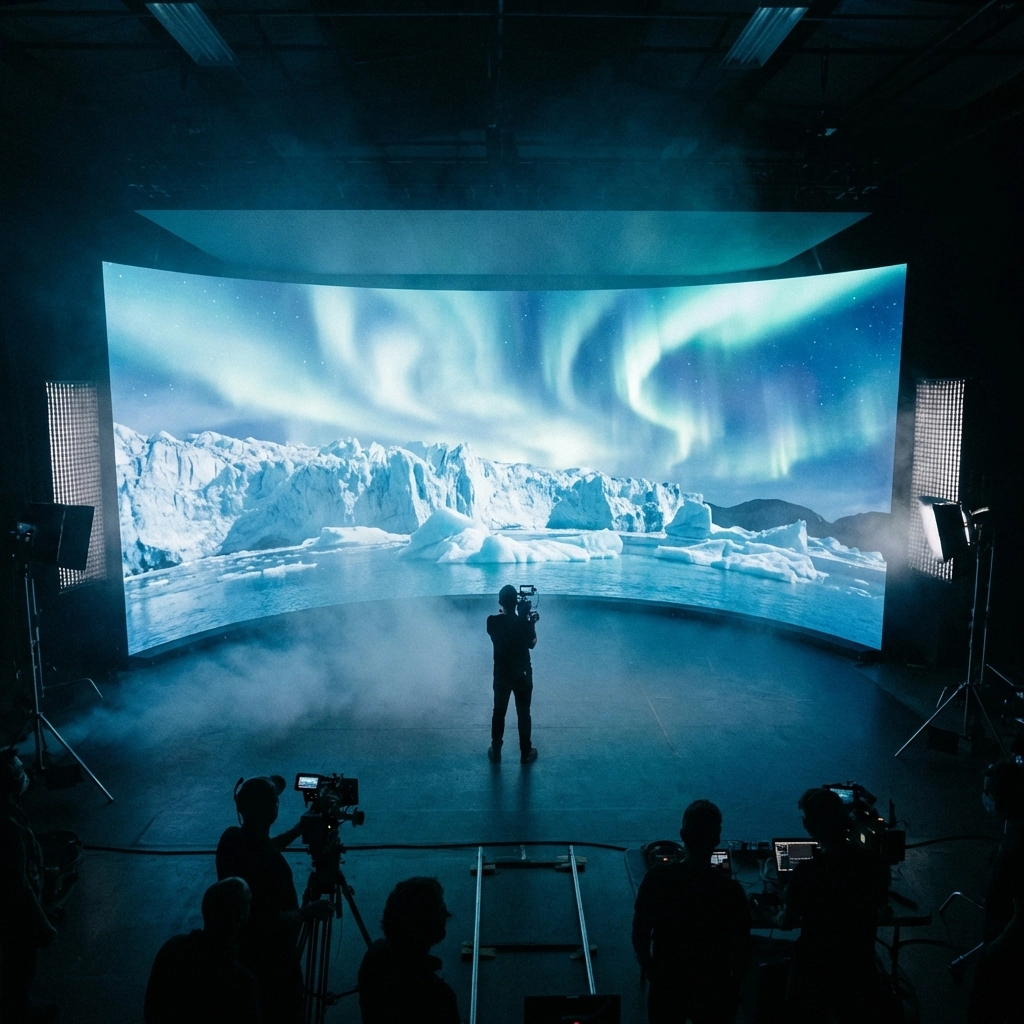
Imagine you're making a documentary about climate change. Instead of flying your crew to multiple continents to capture melting glaciers, rising sea levels, and changing landscapes, you can recreate these environments with stunning accuracy. The technology allows you to place your interview subjects in these contexts without the logistical nightmare of remote location shoots.
This doesn't mean replacing all real locations: it means being strategic about which ones you actually need to visit. Use LED volumes for establishing shots, context scenes, or when recreating historical environments that no longer exist.
2. Cut Post-Production Time (and Costs) in Half
Traditional documentary post-production often involves months of color correction, compositing, and visual effects work. LED volumes capture most of your environmental work in-camera, which means less time in the edit suite and fewer bills from post-production houses.
When you shoot against an LED wall, you're getting final-quality lighting and backgrounds immediately. Your editor receives footage that's much closer to the finished product, which translates to faster turnarounds and lower post-production costs.
3. Create Controlled, Repeatable Interview Environments
Documentary interviews are often at the mercy of location constraints: harsh lighting, noise issues, or spaces that don't support your story visually. LED volume stages give you complete environmental control while maintaining authentic-looking backgrounds.
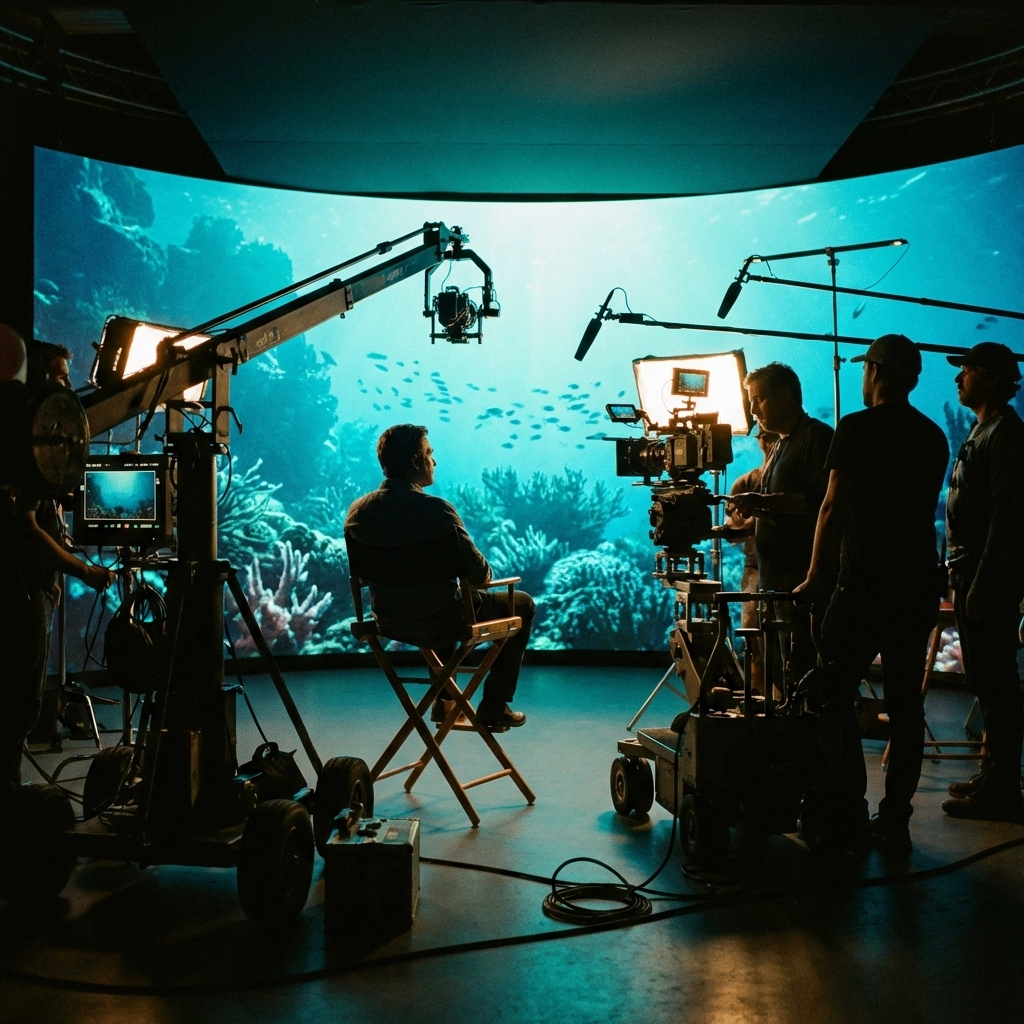
Need to interview five experts about ocean conservation? Instead of dealing with five different locations, lighting setups, and audio challenges, create one perfect underwater-themed environment and bring all your subjects to it. The consistency improves your film's visual cohesion while dramatically reducing setup time between interviews.
This approach works particularly well for historical documentaries where you want to place contemporary experts in period-appropriate settings, or for scientific documentaries where abstract concepts need visual support.
4. Minimize Crew Size and Equipment Needs
Traditional location shooting often requires larger crews to handle various challenges: gaffers for complex lighting situations, sound engineers for difficult audio environments, and additional assistants to manage equipment in challenging locations.
LED volume stages consolidate many of these needs. The controlled environment means smaller crews can achieve professional results. You don't need extensive lighting packages because the LED wall provides your key lighting. You don't need audio specialists dealing with wind, traffic, or other location-specific sound issues.
A typical LED volume documentary shoot might need 60% fewer crew members than a comparable traditional location shoot, which significantly impacts your budget and scheduling complexity.
5. Enable Multiple Setups Without Location Changes
Here's where LED volumes really shine for documentary work: the ability to "travel" to multiple locations in a single day. This is particularly valuable when working with busy interview subjects who have limited time availability.
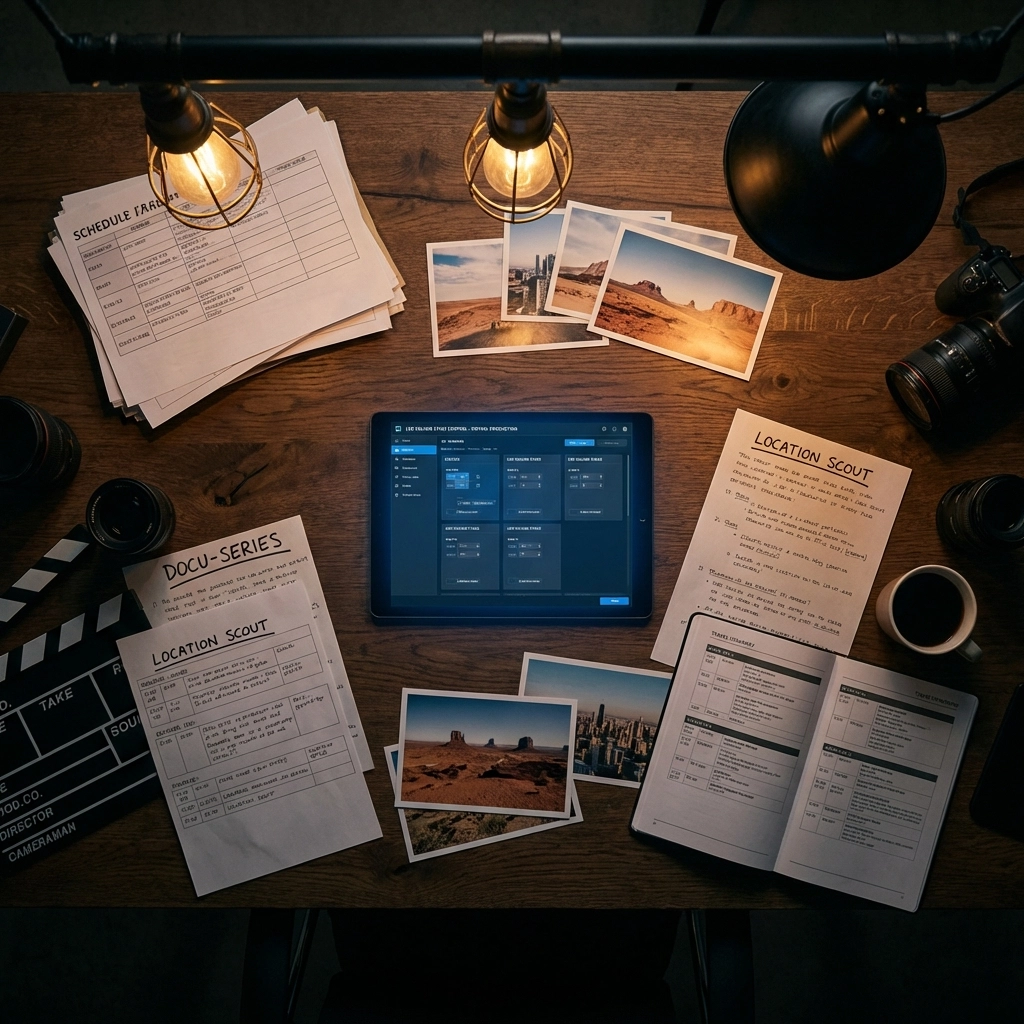
Let's say you're documenting an architect's career. In one afternoon, you could place them in recreations of their most famous buildings, different historical periods that influenced their work, or even conceptual environments that represent their design philosophy. Traditional location shooting would require multiple days, travel coordination, and significantly higher costs.
This flexibility also allows for better storytelling. If you realize during the edit that you need additional footage to support a narrative point, you can recreate the environment and shoot supplemental material without the complexity of returning to original locations.
6. Get Immediate Visual Feedback for Better Storytelling Decisions
One of the most frustrating aspects of traditional documentary production is waiting to see how everything comes together in post-production. With LED volumes, what you see on set is essentially what you get in the final film.
This immediate feedback allows you to make better creative decisions while you're still shooting. If a background isn't supporting your subject's story effectively, you can adjust it in real-time. If the lighting isn't creating the mood you need, you can see and correct it immediately.
This capability is particularly valuable for documentary work because it allows you to ensure that your visual choices are supporting, not competing with, your storytelling goals.
7. Embrace Sustainable Production Practices
The documentary world is increasingly conscious of environmental impact, especially when creating films about environmental topics. LED volume technology significantly reduces the carbon footprint of productions by eliminating travel, reducing equipment transport, and minimizing location impact.
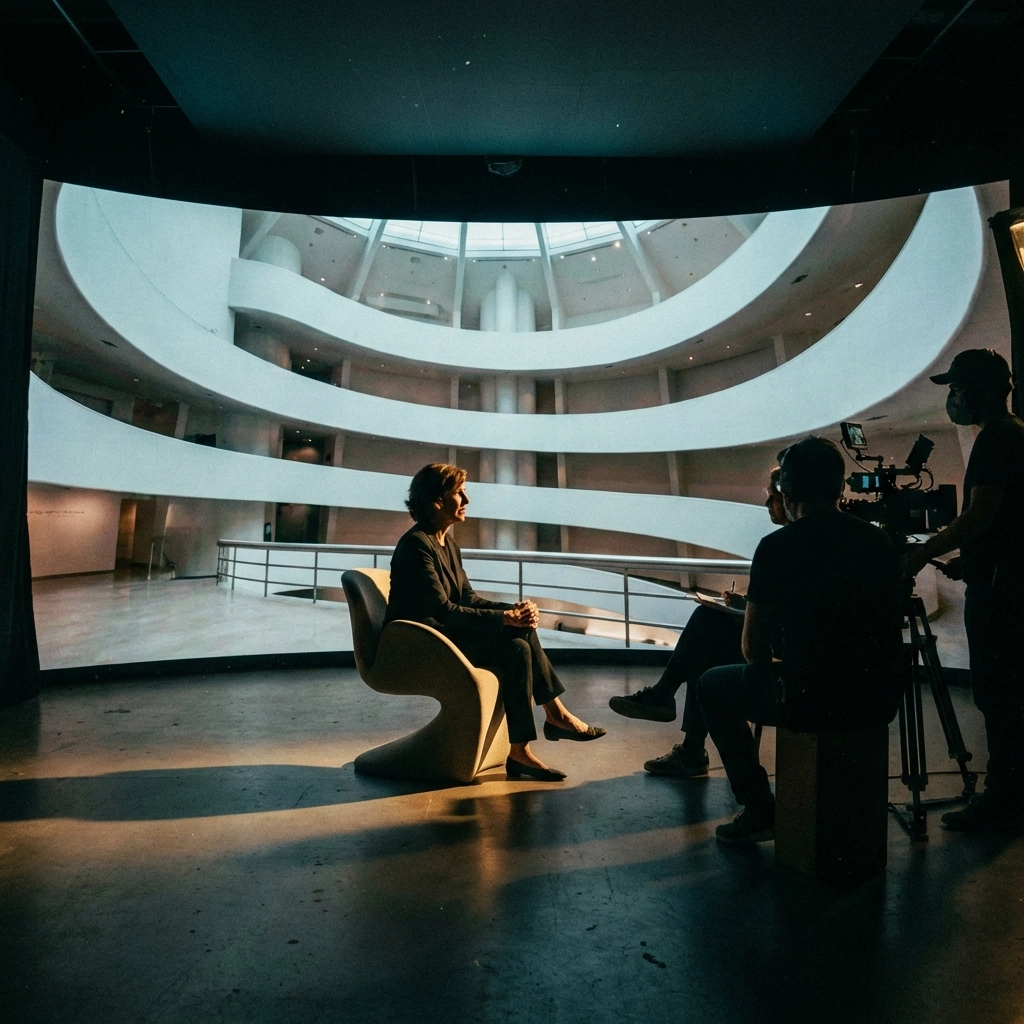
A climate change documentary shot traditionally might involve flights to multiple continents, ground transportation for crew and equipment, and the inevitable waste associated with location shooting. LED volume production keeps your team in one place while still achieving global visual scope.
This sustainability angle isn't just good for the planet: it's increasingly important for funding. Many grant organizations and broadcasters now prioritize productions that demonstrate environmental responsibility.
Making It Work for Your Documentary
LED volume technology isn't right for every documentary, but it's worth considering if your project involves:
Multiple interview subjects who need consistent environmental context
Historical recreations or situations where original locations are inaccessible
Concepts that benefit from visual metaphor or abstract representation
Budget constraints that make extensive location shooting prohibitive
Tight production timelines that don't allow for extensive travel
The key is thinking strategically about which elements of your story truly require authentic locations and which can be effectively recreated. LED volumes work best as part of a hybrid approach: combining the technology's cost and creative benefits with traditional documentary techniques where they're most valuable.
The Bottom Line
LED volume stages aren't about replacing authentic documentary filmmaking: they're about expanding your toolkit. When used thoughtfully, they can help you tell more compelling stories while staying within budget and timeline constraints.
The technology continues to become more accessible, with rental facilities opening in major production centers and costs dropping as the equipment becomes more standardized. For documentary filmmakers willing to think creatively about production methods, LED volumes offer a path to more ambitious storytelling without the traditional budget barriers.
The question isn't whether virtual production belongs in documentary filmmaking: it's how you'll use it to tell better stories more efficiently.
Comments